

- File type
- Chip Tuning
- Brand
- VW
- Car model
- PASSAT
- Hardware number
- 03L907425C
- ECU
- PCR2.1
- Software number
- 03L906023FS 9978
- PCR DPF EGR TUNED2.097.152 bytes
- PASSAT PCR2.1 ORG.bin2.097.152 bytes
VW PASSAT PCR2.1 03L907425C 03L906023FS 9978 DPF EGR OFF STAGE1 TUNED VMAX
Chip tuning (stage 1 remap) file for the VW PASSAT (PCR2.1). HW 03L907425C / SW 03L906023FS 9978. Instant download after payment.
30,00€
- Instant download — the file is available the moment payment clears.
- Kept in your account — re-download any time from My Account.
- Read from a real unit — listed by the exact hardware and software number.
Need a different version or hardware number? Request the file, we usually source it the same day.
- Imunify360 real-time scanning
Description
VW PASSAT PCR2.1 03L907425C 03L906023FS 9978 DPF EGR OFF STAGE1 TUNED VMAX is a chip tuning (stage 1 remap) file for the VW PASSAT fitted with the PCR2.1 engine control unit. It matches hardware number 03L907425C and software number 03L906023FS 9978. The file is supplied exactly as read from the unit, without alterations.
Typical use: improving power and torque while keeping the engine within safe factory limits. Before writing the file, confirm that the hardware and software numbers printed on your ECU label match the numbers above; writing a file to a unit with different numbers can damage the ECU.
After secure checkout the file is available for instant download from your AutoECUFile account, and it stays there for later downloads. Need another version of 03L906023FS 9978, or a file that is not listed? Send us a file request and we will source it for you.
VW PASSAT PCR2.1 03L907425C 03L906023FS 9978 DPF EGR OFF STAGE1 TUNED VMAX
ORGINAL AND MOD FILE
Specification
Reviews
Other files for software number 03L906023FS 9978
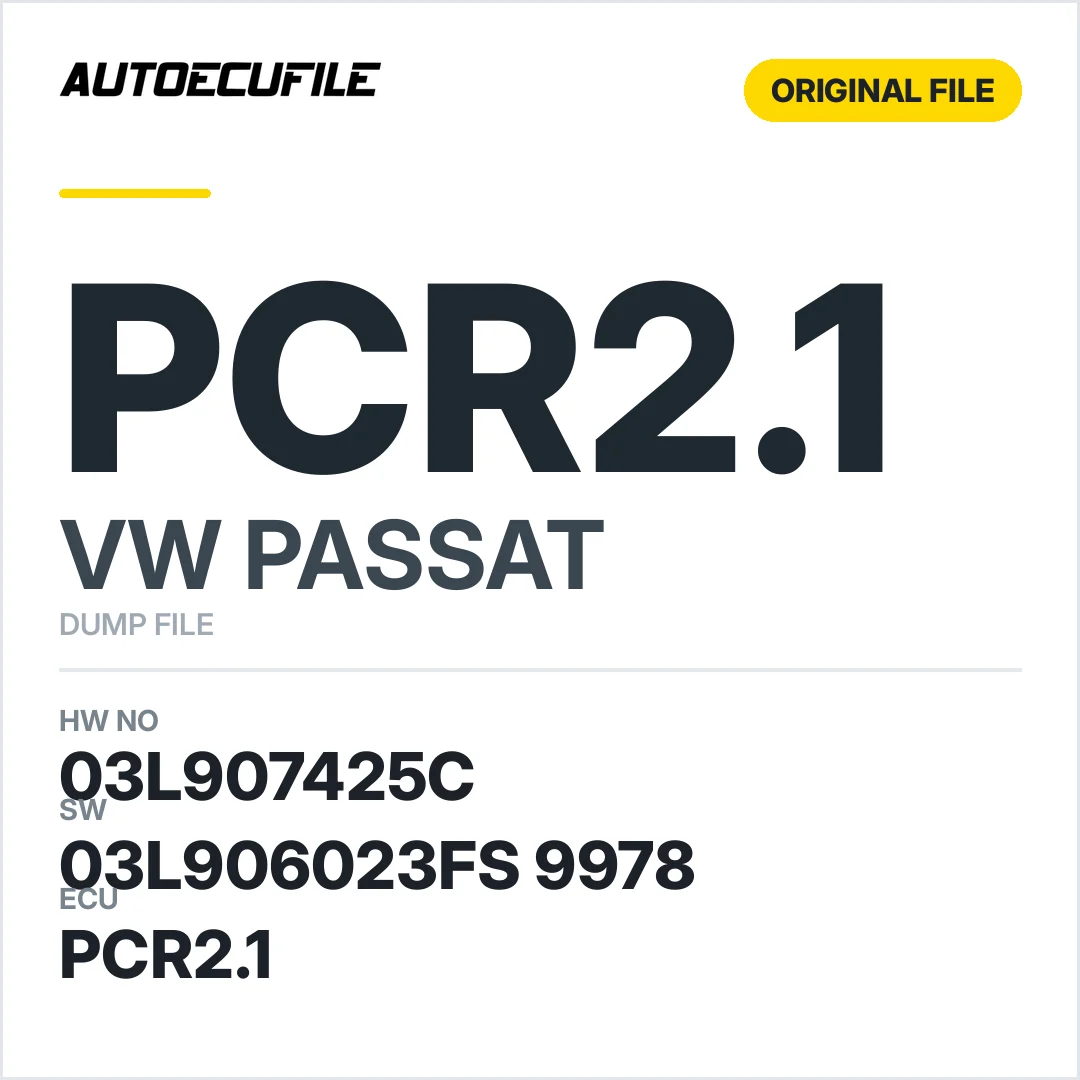
Files for hardware number 03L907425C


More PCR2.1 ECU files


Guides for this file
- PCR2.1 Immo Off and Virgin File: VW, Audi, Seat and Skoda 1.6 TDI Common Rail ECU Guide
- Stage 1 Chip Tuning: What Changes in the File and What Gains to Expect
- Tuning Protection (TPROT) on EDC17 and MED17: What It Is and How to Bypass It Safely
- DPF Off Explained: How It Works, Which Fault Codes It Removes and What to Check First